There is a specific kind of tired that comes from building something with no one else in the room. Not the tired of a long day, but the tired of being the only person who fully understands what is at stake, the only one who can make the final call, and the only one who has to sit with the outcome afterward. Co-founders disagree, and co-founder conflict is its own well documented problem, but co-founders also absorb some of the weight together. Solo founders do not have that option. Every hard decision, every slow month, every moment of doubt gets processed alone, usually late at night, usually with no one to talk it through.
That structural aloneness is not a personality flaw or a sign that someone is not cut out for this. It is a predictable, well studied source of strain, and it shows up in how solo founders think, sleep, and search for help.
What the research says about the toll of founding alone
Entrepreneurs as a group carry a heavier mental health load than the general population, and researchers have pointed specifically to the lack of a co-founder as one of the reasons that load can land harder on solo founders.
A study of 242 entrepreneurs by UCSF psychiatrist Michael Freeman found that 72 percent reported a lifetime history of at least one mental health condition, compared with 48 percent of a matched comparison group. Depression was nearly twice as common among the entrepreneurs surveyed, at 30 percent. (Small Business Economics, 2019)
Research on solo founder business outcomes specifically is mixed and depends heavily on how success is measured, with some studies favoring team based startups and others finding solo founded ventures surviving just as long or longer. What is more consistent across the research is the emotional and psychological cost, which is where a co-founder's absence is felt most directly.
Why solo founders are turning to AI chatbots at 2am
When there is no co-founder to call and no team member you want to worry with your doubts, a growing number of people are opening a chat window instead, specifically to talk through what they are feeling.
A Stanford-affiliated study of 1,871 U.S. adults found that 24 percent had used a large language model for mental health purposes, most often because it was free, available at any hour, and did not require waiting for an appointment. Based on that rate, researchers estimate roughly 14 to 18 million U.S. adults were using LLMs for mental health support as of 2024, a number that has almost certainly grown since. (Stanford CREATE / OSF Preprints, 2025)
There is no study that breaks that number down by occupation, so there is no clean statistic for how many solo founders specifically are among them. But founders have talked openly about being part of this trend. Emad Mostaque, the founder of Stability AI, has described using ChatGPT to think through the stress of running a company, while noting himself that it is not a substitute for a human therapist. Reporting from Semafor as early as 2023 described startups building products specifically to meet a surge in demand for chatbot based emotional support, driven in part by exactly the kind of person who has no one else to ask at midnight: someone building alone. (Semafor)
That tension, reaching for something that is available at any hour versus something that can actually help you change, is at the center of why this matters. AI can help someone organize a racing set of thoughts at 2am. It cannot treat burnout, track a pattern over months, or hold someone accountable to actually doing something differently.
What solo founders are actually typing into search bars and AI chats
Across founder forums, subreddits, and the questions that show up again and again in founder communities like Indie Hackers, a few themes repeat constantly. Solo founders are not usually searching for generic startup advice. They are asking much more specific, much more personal questions.
Questions about the work
- Am I burned out, or is this just what building a company feels like?
- How do I know if I should quit?
- Should I find a co-founder, or is it too late to bring someone in?
Questions about themselves
- How do other people deal with the loneliness of doing this alone?
- Is what I'm feeling imposter syndrome, or is it something else?
- Is it normal to feel like this, or is something actually wrong?
These are not questions a search engine or a chatbot can fully answer, because they are not really information problems. They are questions about identity, pressure, and whether the way someone is living is sustainable. That is the kind of thing that tends to need an actual person, not just a fast answer.
What actually helps
Most of the advice aimed at solo founders focuses on productivity: better systems, better tools, delegate more, sleep more. That advice is not wrong, but it treats the problem as logistical when it is often also emotional. A few things tend to make a real difference.
Naming the isolation instead of pushing through it. Solo founders often normalize the loneliness because everyone around them seems to be managing fine. Naming it, even just privately or to one trusted person, tends to be the first step toward doing something about it instead of white-knuckling through another quarter.
Building a structure for support that does not depend on a co-founder. Peer groups, advisors, mentors, and therapy all serve a similar function that a co-founder would otherwise provide: a place to think out loud, get pushback, and not carry every decision entirely alone. None of these fully replace a co-founder, but together they can meaningfully close the gap.
Getting support that is built for this specific pressure. General wellness advice rarely accounts for what it actually feels like to have your income, your identity, and your team's livelihood riding on decisions you make alone. Working with someone who understands the specific shape of founder stress, including the isolation, the identity questions, and the always-on pressure, tends to help faster than generic coping strategies. That's the focus of Individual Therapy for Founders, one-on-one work built around what solo founders are actually carrying.
Frequently asked questions
Is it harder to be a solo founder than to build with a co-founder?
It is a different kind of hard. Co-founders bring their own strain, including conflict and misalignment, but they also share the emotional load and the decision-making. Solo founders carry both alone, which is why isolation and decision fatigue tend to show up faster and more intensely.
Do solo founders really struggle with mental health more than other people?
Research on entrepreneurs broadly, not solo founders specifically, has found meaningfully higher rates of mental health conditions compared with non-entrepreneurs. Solo founders lack the built-in support of a co-founder, which researchers point to as a specific risk factor for isolation and burnout.
Can ChatGPT or other AI tools replace therapy for founders?
AI tools can be useful for processing thoughts, drafting a hard email, or getting unstuck on a decision at 2am. They are not equipped to treat anxiety, depression, or burnout, and they cannot replace the accountability and relationship of ongoing work with a licensed therapist.
What are common signs of solo founder burnout?
Common signs include chronic exhaustion that does not improve with rest, difficulty making decisions that used to be easy, irritability, withdrawing from friends and family, loss of interest in the work itself, and physical symptoms like sleep problems or frequent illness.
Where can solo founders find support in San Francisco?
Individual therapy focused on the specific pressures of founding a company is available in person at 220 Montgomery St in San Francisco's Financial District, and by telehealth across California, New York, and Minnesota.
Building alone is still building. It does not have to mean carrying all of it by yourself.
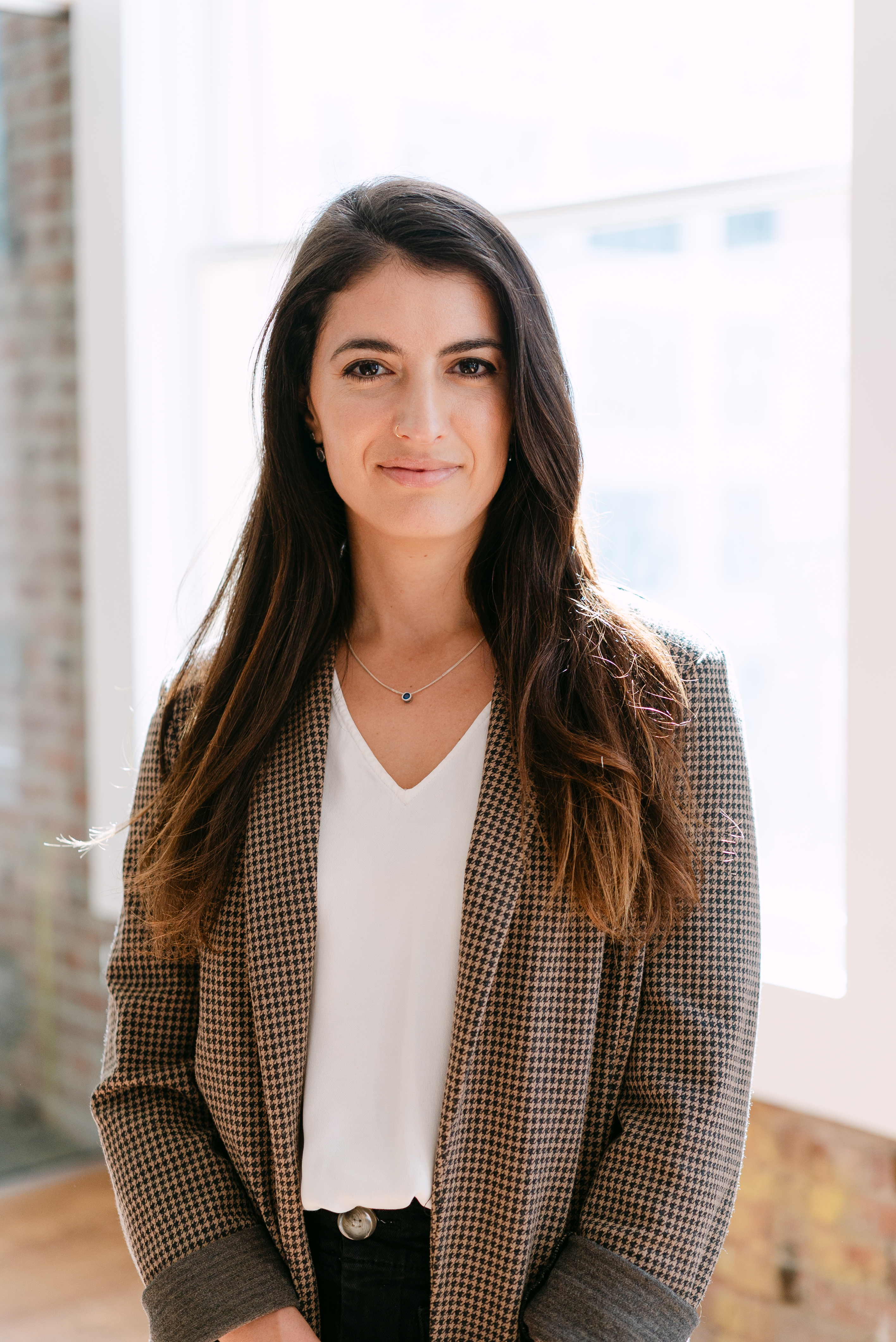
Ana Zedginidze, LPCC is a therapist for founders in San Francisco’s Financial District, licensed in California, Minnesota and New York. About Ana